
Sharing Local Voices and Stories Since 1983
St. Ita’s Hospital Radio was located at St. Ita’s Hospital in St. Patrick’s Parish, Portrane, Donabate, Co. Dublin Ireland. We used to broadcast on 97.4fm and the 89.5 fm. Today we are an online station.
Hospital Radio first broadcast in December 1983, using home-made equipment, from a storeroom at the hospital. One of the services provided at the time was a cable television service which piped movies to the wards. With the arrival of cheaper VCR’s in the wards the requirement for this service diminished and it was discontinued.
St. Ita’s Hospital Radio was the first radio station in Ireland to receive one of the new broadcast licenses when the minister for communications of the day introduced the broadcasting bill in the late 1980s.
The station then operated from a modern studio with professional equipment in compliance with the criteria laid down by the Broadcast Commission of Ireland under a five year licence.
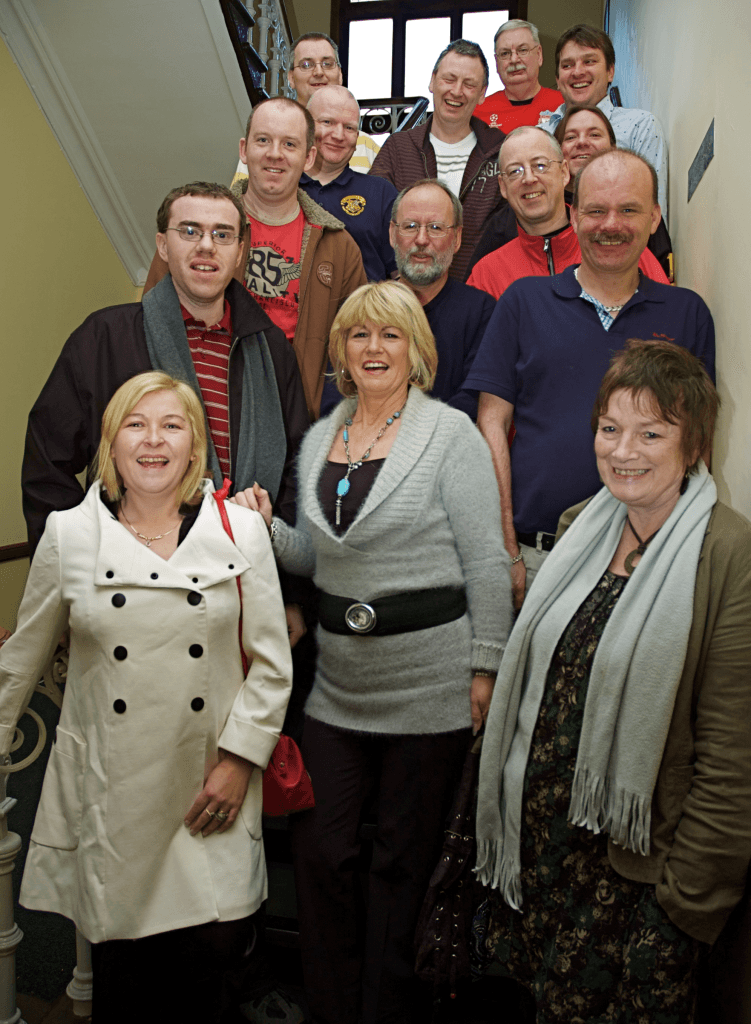
We had 15 voluntary presenters and broadcast around the clock with live shows from 10am to 2pm each day and an automated play lists for the remainder which proved immensely popular with our audience.
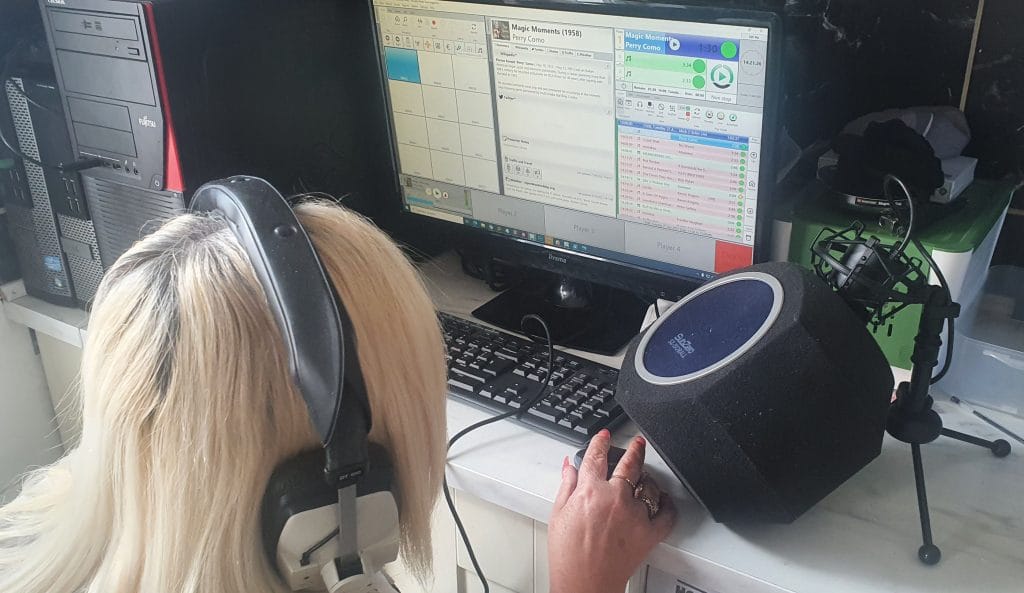
While our music is primarily middle of the road we always bear in mind the diversity of tastes of our listeners within the hospital and beyond and endeavour to cater for all their musical tastes . You are as likely to hear Elvis Presley as to hear Eminem !!
Tuesdays used to feature a popular weekly Hospital Radio Free Bingo for residents, while services to the wider community included a Community Notice-board, For Sale & Wanted and Job Spot. Our request line was always open and we had an sms service to assist our listeners in contacting us.
Funding for our service came from The Health Executive as well as the occasional fund raising event and selected sponsorship partners and local businesses. We would like to extend our sincere thanks to Shannon Solicitors for their continued support of our Station through the years. We always tried to increase local awareness of businesses and service please but we were forbidden under our license to advertise.
From 1983 to 2024 we Broadcast fm to the Residenst and staff of St. Ita’s Hospital in Portrane In North Co Dublin. In 2013 we launched an online version of the station.
In 2024 The FM Licence we operated under expired and Hospital management did not renew it and the station closed down.At the time we closed down we had 32 presenters providing recorded and voice tracked shows on a weeklay basis. We were broadcasting around the clock, 365 days of the year. Left with a void in their week all the presenters suggested we launch a new station and Hospitalradio.ie was born.
In 2025 we launched a second station HR. Country focusing on Country music.In 2026 I have decide to put St. Ita’s Hospital Radio back online using the original server , imaging , Library and playlists. That’s stage one of the plan which is a work in progress at the moment. After that work is completed I will see what we want to do with it if anything. imay just leave it as a it is m wall to wall music or I may use the vast library of recorded radio shows I build up over many years to program the station.Tom Noctor Station ManagerBringing Community Voices to Life
Discover key statistics that showcase our impact and community reach.
1983
Years on Air
Since our founding at St. Ita’s Hospital, we’ve offered a consistant and professional service to the community.
5000
Listeners Served
Engaging thousands weekly with diverse, music-focused programming.
150
Programs Produced
Offering a wide variety of shows tailored to entertain and inform.
100
Volunteers
Dedicated team members supporting our mission around the clock.
A Concise History Of St. Ita’s Hospital
Due to overcrowding at the Richmond Hospital Dublin in 1892 it was decided to build an additional asylum for the Dublin region, covering counties Dublin, Louth, and Wicklow. Portrane House, the early eighteenth-century home of the Evans family surrounded by a 460 acre demesne, was selected as a suitable site. In August 1894 a limited architectural competition was staged to select a suitable design for the asylum.
George Coppinger Ashlin (1837-1921), the partnership of Carroll & Batchelor (formed 1892), and William Kaye-Parry (1853-1932) were the finalists. Despite its higher estimated price, Ashlin’s project, entitled “Aspect” and in a late Gothic Revival style, won the competition on the proviso that its cost would be reduced. Ashlin’s design was ultimately successful as it offered the most space and could be realised with few modifications. Alfred Ignatius McGloughlin (1863-1940s) collaborated on the project and supervised the construction until a domestic scandal compelled him to leave Ireland for the United States circa 1900. Begun in 1896, work on the asylum was completed in 1903.
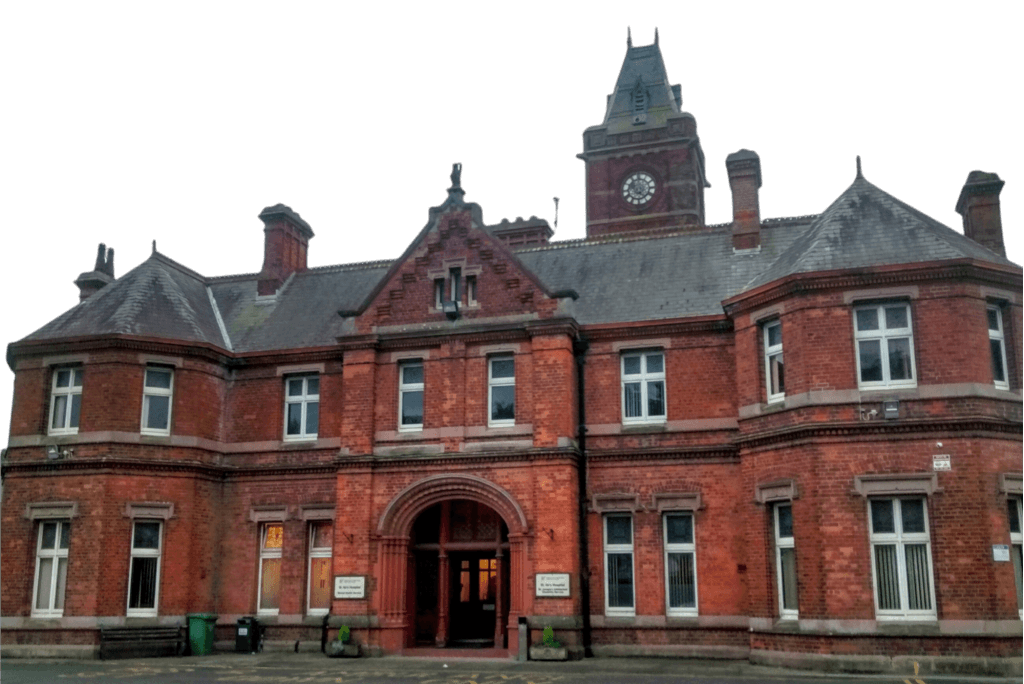
Although designed to accommodate 1,200 patients it was anticipated as early as 1895 that the issue of overcrowding would eventually emerge. In 1896, thirty women were accommodated in the original Portrane House, which later served as a residence for the Medical Superintendent prior to its demolition in the late twentieth century. From 1897 a number of temporary buildings were erected, housing up to 400 patients and continuing in use until recent years.
Saint Ita’s Hospital was to prove Ashlin’s largest secular commission. It was also the most expensive building supported by the British Government in Ireland. The difficulty of site access and the importation of construction materials, including slate from Antwerp, no doubt contributed to the cost, although some of the brick was supplied by the local Portmarnock Brick Company. The complexity of the plan also added to the cost. It belongs to a new generation of asylums built on an echelon or broad-arrow plan, a formula first developed at Gloucester (1879). An octagonal corridor connects a series of independent pavilion buildings, allowing each of them a clear southerly view on the sea. This plan type has nothing to do with that of a prison – rather than locking up and throwing away the key, the health of a patient was to be achieved through the sensation of space and the opening towards nature.
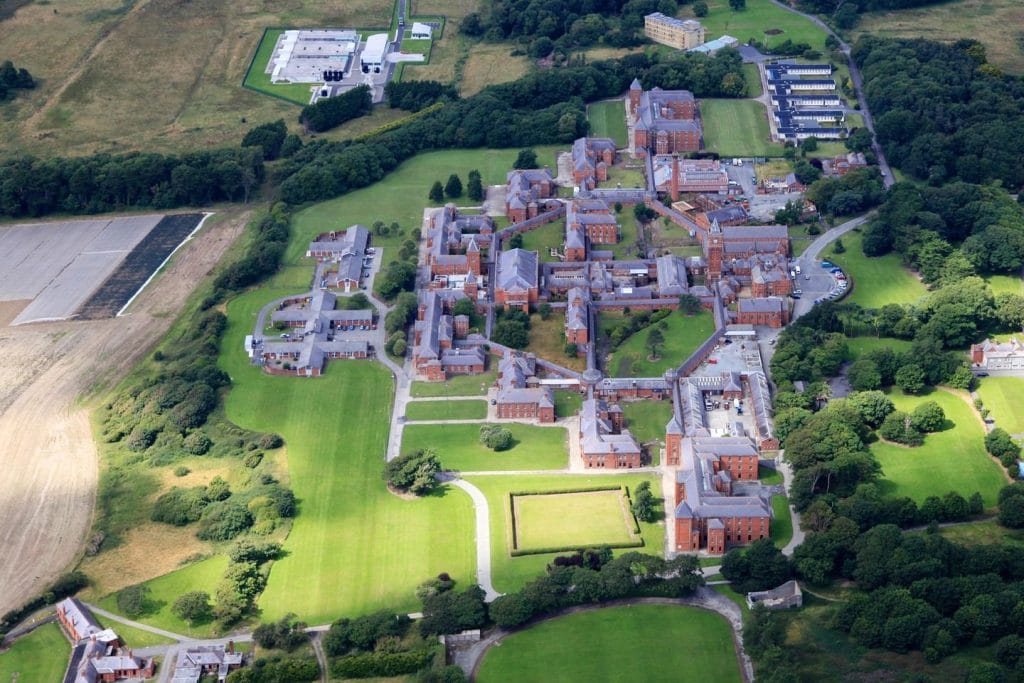
 St. Ita’s Aerial View
The symmetry of the plan is a familiar feature reflecting the then-standard practice of institutional segregation of the sexes. A central Administration Block separated two zones designated as the “Female Side” and the “Male Side”. Within each “side” the patients were further separated into four categories depending on the acuteness of their illness.
In it’s heyday St. Ita’s operated effectively as a self-sufficient mini-town and was looked upon as a ‘model’ for the care of the mentally ill. Surrounded by 300 acres of farm-land and housing 2 churches, a bakery, a butcher, a tailor, a hairdresser and even a shoe repair service, this hive of industry even had its own fire station, morgue and graveyard. Food for the then 1600 patients and over 300 live-in staff was prepared and cooked in huge on-site kitchens with some of its vegetables grown in the extensive gardens on the campus. Laundry facilities required a staff of seventeen with as many patients also working on a part-time in this area.
After the introduction of deinstitutionalisation in the late 1980s, the hospital went into a period of decline. Nearly 500,000 viewers watched an episode of the RTÉ documentary The Asylum which featured St Ita’s Hospital in 2005.
In June 2010, the Mental Health Commission instructed the hospital to stop the admission of acute patients on account of the “entirely unacceptable and inhumane conditions” by 28 February 2011. The hospital closed to inpatients in March 2011[ and to outpatients as well in January 2014.
The Health Service Executive (HSE) announced in February 2012 that the Central Mental Hospital would relocate to the former site of the old St Ita’s Hospital. The new hospital was completed in 2020, however, construction work and industrial relations issues delayed the opening until November 2022. Today the former St Ita’s Hospital Complex and Portrane Demesne is an active HSE Healthcare Campus with several services operating from the site and is a designated Architectural Conservation Area.

Established Community Connection
Founded at St. Ita’s Hospital in 1983, our station has been a trusted voice for Portrane and beyond.

Diverse Programming Excellence
Our varied shows reflect the vibrant interests of our listeners, fostering inclusivity and entertainment.

Volunteer-Driven Dedication
Our passionate volunteers fueled the station’s success, ensuring authentic community representation.